If you are looking at Seagrove Beach as a vacation rental investment, it helps to know this market rewards the right property more than just any property. Buyers are often drawn in by the 30A lifestyle, but strong underwriting here depends on details like beach access, parking, zoning, and how well a home fits the way guests actually travel to South Walton. This guide breaks down what matters most so you can evaluate Seagrove rentals with more clarity and confidence. Let’s dive in.
Why Seagrove Stands Out
Seagrove sits within Walton County’s South Walton area, where beach access and outdoor connectivity play a major role in rental appeal. Public tourism materials highlight Seagrove’s sugar-white beaches, neighborhood businesses, nearby dining, and access to places like Eastern Lake and the Timpoochee Trail. Across South Walton, there are 26 miles of beaches, 16 beach neighborhoods, and more than 60 beach, lake, and bay access points.
For investors, that means location value is not just about being near the water on a map. In Seagrove, the real premium often comes from how easy it is for guests to get to the beach, move around the area, and avoid friction during busy seasons. A home with a strong access story and practical parking can have a meaningful edge.
What the Rental Data Suggests
Third-party market estimates from AirROI show Walton County with 36.1% occupancy, $625 average daily rate, $62,714 annual revenue, and $238 RevPAR. In the broader Santa Rosa Beach market, which includes Seagrove Beach among active neighborhoods, AirROI estimates 39.0% occupancy, $564 average daily rate, $60,822 annual revenue, and $234 RevPAR.
Seasonality matters here. AirROI shows July as the strongest revenue month and January as the weakest in both Walton County and the broader Santa Rosa Beach market. Average booking lead time is estimated at 54 days in Walton County and 67 days in Santa Rosa Beach, which points to a destination market where many guests plan ahead.
That pattern is important if you are building a pro forma. Seagrove is not a flat, year-round booking story. Summer strength can be compelling, but you should underwrite with softer winter demand in mind.
What Guests Are Renting
The local short-term rental market is heavily weighted toward whole-home stays. In Walton County, AirROI reports that supply is almost entirely entire-home listings, and houses account for 88.6% of active inventory. In the broader Santa Rosa Beach data, houses make up 68.6% of supply.
Larger homes also dominate the market. In Santa Rosa Beach, 4-bedroom homes are the most common type, 3+ bedroom listings make up 69.9% of inventory, and 66.4% of listings can host 8+ guests. Walton County’s FY2025 short-term rental program report also shows that 51% of units average 2 to 3 rooms per property, which supports the idea that much of the market serves larger travel groups rather than solo or one-bedroom demand.
The takeaway is straightforward. Seagrove tends to favor multi-bedroom homes built for family and friend travel, not small-unit turnover.
Who the Typical Guest Is
AirROI data for the broader Santa Rosa Beach and 30A market shows an overwhelmingly domestic guest base, with 98.5% domestic travelers. The same report identifies Atlanta as a top origin signal, with English and Spanish listed as primary languages.
Average stay in Walton County is 5.1 nights, which fits a leisure-driven destination more than a business-travel market. Seagrove’s public tourism profile also points to a vacation pattern centered on beach time, dining, shopping, and outdoor activities.
For you as an investor, that means guest expectations often center on ease, comfort, and group usability. Layout, bedroom count, parking, beach access, and a smooth arrival experience can matter just as much as finishes.
Features That Can Strengthen Rental Appeal
Based on the market mix and local rules, some features stand out more than others when you are evaluating a Seagrove property.
Beach access matters
In Seagrove, easy access to the sand is a major selling point. Old Seagrove’s adopted neighborhood plan documents long-standing beach-access easements and a pedestrian beach-access network, which helps explain why homes closer to practical beach entry points can attract stronger interest.
Nearby state parks also show why convenience matters. Deer Lake State Park and Grayton Beach State Park both note that they can close temporarily during periods of high visitation. On busy days, a rental with simpler beach logistics can become more attractive to guests.
Parking is not a small detail
Walton County requires parking to be identified in the short-term rental certificate and in advertising. Existing units generally use available onsite parking, while new construction must meet a standard of one parking space per 900 square feet.
In a market built around larger group travel, off-street parking can affect both guest satisfaction and compliance. If you are comparing two homes with similar pricing, parking capacity may be one of the easiest ways to separate a stronger rental candidate from a weaker one.
Bigger homes often fit demand better
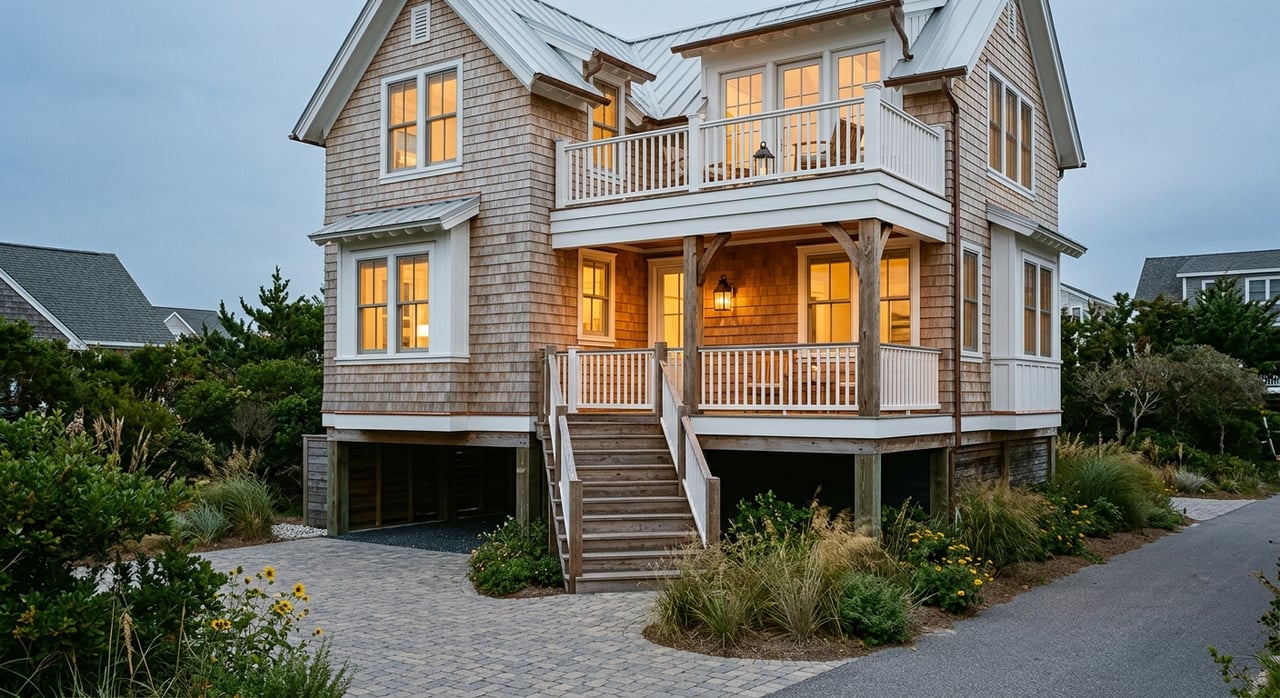
Because the market leans toward whole-home, multi-bedroom stays, homes with 3 to 4 bedrooms or more often align better with the active inventory mix and guest profile. That does not guarantee performance, but it does match the dominant product type in Walton County and Santa Rosa Beach.
As always, you will want to compare bedroom count with zoning limits, lot constraints, and actual functional usability. In Seagrove, a high bedroom count only helps if the property can legally support the intended use.
Compliance Items to Verify Before You Close
In Seagrove, compliance deserves as much attention as projected revenue. Walton County has clear short-term rental requirements, and Old Seagrove has its own overlay rules that can affect development and bedroom counts.
County short-term rental registration
Walton County requires annual short-term rental registration. Current fees are $300 per property for individual registration or $227 per property for community registration. The county states that operating without registration can lead to a $500 per day penalty.
Owners also need to renew before expiration. If an owner cannot respond within one hour, the county says a local responsible party may be required.
Occupancy and parking standards
Walton County sets maximum occupancy at one person per 150 square feet of heated and cooled living area, or a lower approved cap. Parking must also be disclosed as part of the certificate and advertising.
The county further requires posted information covering trash, noise, evacuation, beach safety, and where applicable, sea turtle nesting restrictions. These are operational details, but they are important because they affect how you set up and run the property.
HOA and condo rules
County rules are only part of the picture. Walton County notes that HOAs can regulate activities through their covenants, and those rules may be more restrictive than county standards.
The county also notes that some condominiums are excluded from the county certification process but still must comply with state licensing and county tax registration. In addition, accessory dwelling units are not available for short-term vacation rentals in Walton County.
Old Seagrove overlay rules
Old Seagrove deserves extra diligence. Walton County’s adopted neighborhood plan says this area functions as an overlay district with standards that apply in addition to the general land-development code.
The plan keeps the Residential Preservation zoning framework, limits density to one dwelling unit per platted lot, and states that newly constructed short-term vacation rental uses shall not exceed six bedrooms. If you are buying for redevelopment, expansion, or a heavy-value-add play, this is a key underwriting checkpoint.
Taxes You Should Plan For
Properties in ZIP code 32459 fall within Walton County’s South Walton tourist development tax district. The local bed tax is 5% of rent plus required non-refundable fees, and state sales tax also applies.
Walton County states that rental platforms do not remit tourist development tax on the owner’s behalf. That means you should have the tax account set up before the first booking rather than assuming the platform handles it for you.
A Practical Way to Underwrite Seagrove
Seagrove works best when you treat it as a premium, leisure-driven market with real operational rules. The strongest opportunities are often the ones that combine location quality with easy beach access, enough onsite parking, and a property type that fits the larger-group travel pattern common in South Walton.
Before you make an offer, it is smart to verify a few things at the parcel level:
- Zoning and overlay district status
- Bedroom-count limits for the property and any planned improvements
- HOA or condo restrictions
- Actual beach-access routes and walkability
- Onsite parking capacity
- County short-term rental registration requirements
- Tourist development tax setup
In other words, Seagrove can be a compelling investment market, but success usually comes from buying with precision instead of relying on broad 30A assumptions.
If you want help evaluating Seagrove opportunities through both a lifestyle and investor lens, the team at Cole Blair Properties, LLC offers high-touch guidance for coastal acquisitions, including vacation-rental and 1031-focused buyers.
FAQs
What should investors look for in a Seagrove Beach rental property?
- Investors should focus on whole-home properties with strong beach access, enough onsite parking, and a layout that fits larger group travel, since the market is dominated by multi-bedroom homes.
How seasonal is the Seagrove Beach rental market?
- Public third-party data suggests the market is strongly seasonal, with July as the top revenue month and January as the weakest.
Are short-term rentals allowed in Seagrove Beach, Florida?
- Short-term rentals operate in Walton County, but owners must verify county registration requirements, parcel-specific zoning, HOA rules, and any applicable Old Seagrove overlay standards before closing.
What are the short-term rental registration rules in Walton County?
- Walton County requires annual registration, charges $300 per property for individual registration or $227 per property for community registration, and states that operating without registration can trigger a $500 per day penalty.
What taxes apply to Seagrove Beach vacation rentals?
- In Walton County’s South Walton district, owners should plan for a 5% tourist development tax on rent plus required non-refundable fees, along with applicable state sales tax.
Does Old Seagrove have special rental property rules?
- Yes. Old Seagrove is governed by an overlay district that applies additional development standards, including one dwelling unit per platted lot and a six-bedroom cap for newly constructed short-term vacation rental uses.